You Slept, But It Felt Like You Were Awake All Night (ADHD)
You lie down, your thoughts drift off on their own, and suddenly it's 3am and it felt like you never slept. It has a name — two, actually — and ADHD makes it a trap.

As an Amazon Associate, TheADHQ earns from qualifying purchases. We only recommend hardware the mechanism itself would prescribe — and we'll tell you when you don't need to buy anything.
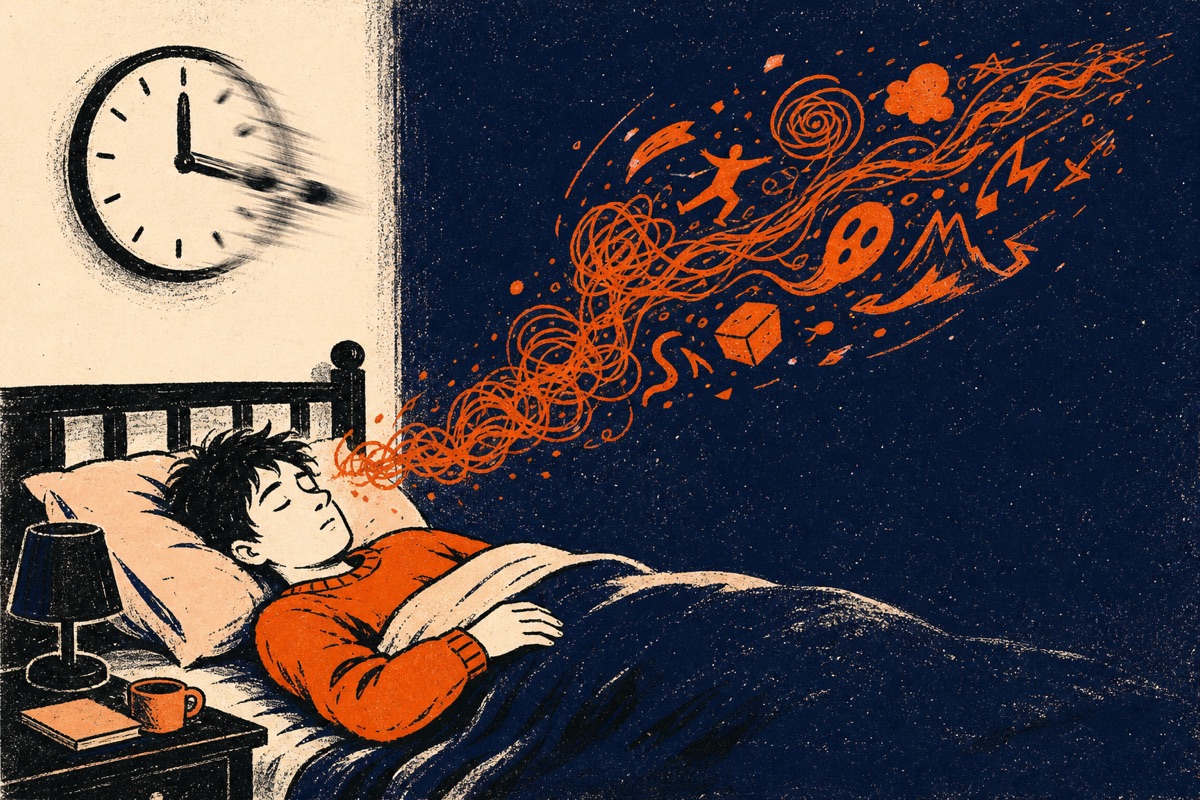
You lie down. You close your eyes. Your thoughts start to drift — not dreams, just your own thoughts, wandering off and picking up speed on their own, while the part of you that's supposed to be steering quietly lets go. And then, with a small jolt, you're back — and you already know, before you even look, that it's somewhere around 3am. It did not feel like sleep. It felt like you were awake and thinking the entire time. And your chest tightens, because now you have to do the math on a night that's already ruined.
If you've lived this, you're not imagining it and you're not broken. It has a name. Two, actually.
If you read nothing else
- The drifting part is hypnagogia — the wake-to-sleep transition, where thoughts go autonomous as your brain's "steering" powers down.
- The "hours passed but it didn't feel like sleep" part is sleep-state misperception — you were asleep; your brain just logged it as conscious thinking. Even healthy people do this.
- ADHD makes you fall into it harder — a delayed clock keeps you in light drifting sleep longer, and a stimulation-hungry brain hijacks the quiet.
- The real danger isn't one bad night. It's the spiral — and left alone, it turns a feeling of not sleeping into actual chronic insomnia. This article is about interrupting it.
Part one: your thoughts drifting off — that's hypnagogia
The first half of what you feel is hypnagogia: the transitional state between being awake and being asleep, physiologically the light-sleep stage called N1. Its signature is exactly what you described — your thoughts turn loose and associative and start generating on their own, while your sense of deliberate control fades out.
Here's the mechanism, and it's oddly beautiful. As you drift, the executive, reality-checking parts of your brain (the prefrontal cortex especially) power down first — but the thought-and-image-generating parts stay lit. So the thoughts keep coming, but the "you" that normally steers and fact-checks them has already left the room. That's why it feels like your mind is running without a driver.
And notice what it isn't: a dream. Dreams (the REM kind) are vivid, story-shaped, hallucinated. What you get at sleep onset is thought-like — fragments, drifts, associations. Your own instinct nailed the science: "it's not a dream, it's just my thoughts" is precisely how researchers separate sleep-onset mentation from dreaming.
Part two: "it didn't feel like sleep" — that's sleep-state misperception
Now the part that has the name you were reaching for.
Sleep-state misperception — older clinical term, also called paradoxical insomnia — is when you were genuinely asleep (an EEG would prove it) but you experienced it as continuous conscious thinking, and you badly underestimate how much you slept. People with it describe it almost word-for-word the way you did: "it felt like I was awake the whole time; it didn't feel like sleep."
So the honest, load-bearing truth: you almost certainly slept more than it felt like you did. Hold onto that. It matters more than it looks, and we'll come back to why.
Why the ADHD brain falls into this harder
Four forces, strongest evidence first:
- Your clock is shifted late (well-established). ADHD reliably delays your melatonin and sleep timing. So when you lie down at a "normal" hour, your body isn't ready — and you spend longer parked in that light, drifting, hypnagogic window instead of dropping into deep sleep. More time in the exact state that produces all of this.
- Your sleep is lighter and more broken (meta-analytic). ADHD is linked to taking longer to fall asleep, lower sleep efficiency, and more awakenings — more surfacing, more misperception, more chances for 3am to grab you.
- Your mind wanders harder (well-supported). An ADHD brain that can't easily down-regulate its wandering by day is primed for the autonomous thought-hijack at night. The runaway is your under-stimulated brain doing what it always does in the dark: manufacturing its own input.
- Time blindness deepens the shock (studied by day, inferred at night). ADHD comes with real time-perception deficits, which plausibly makes the "where did the hours go" jolt land even harder.
One honest note: whether ADHD people specifically misperceive sleep more hasn't been directly measured yet — it's a very reasonable hypothesis given all of the above, but nobody has run that exact study. I'd rather tell you than oversell it.
The part nobody warns you about: how this sinks you deeper
A single foggy night is harmless. The problem is what happens when this becomes a pattern and nothing interrupts it — because it doesn't stay a feeling. It becomes a machine that manufactures real damage.
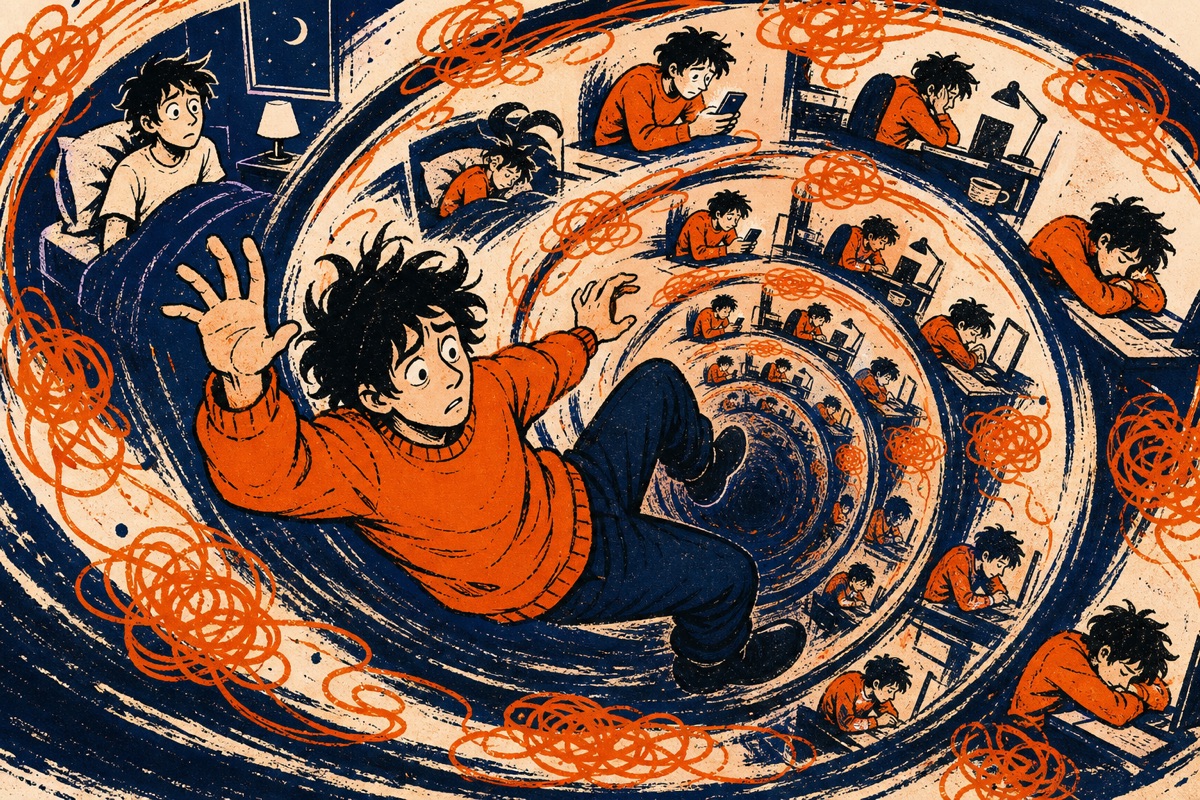
Here's the loop, one turn at a time:
- You wake at 3am convinced you didn't sleep. Cortisol spikes on cue — you start doing frantic math about tomorrow.
- That math becomes dread. You begin to fear bed, because bed is where this happens. And fearing sleep is the single most reliable way to destroy it — sleep is automatic, and the moment you try hard at an automatic thing, you jam it.
- Dread becomes real hyperarousal. Now your nervous system is genuinely wound up at bedtime — and that's not a misperception anymore. That's the mechanism that turns feeling like you don't sleep into actually not sleeping. Subjective insomnia quietly becomes the real thing.
- The 3am wake gets filled with the worst possible input. Awake in the dark, your understimulated brain reaches for stimulation — so you doomscroll, or you ruminate, replaying every failure. The light pushes your late clock later; the rumination trains your brain that bed is for spiraling. (This is where it braids into revenge bedtime procrastination and the 2am racing-thoughts trap.)
- The wreckage shows up by daylight. A poorly-slept ADHD brain has less impulse control, more emotional reactivity, worse focus — so tomorrow is harder, more stressful, more defeating. And stress is fuel for tomorrow night's hyperarousal.
- Back to step one, worse.
For an ADHD brain this spiral is steeper, because the 3am despair doesn't stay about sleep. Emotional regulation is already thin; at 3am, running on nothing, it's gone. "I couldn't sleep" becomes "I can't even do the most basic human thing," becomes the old familiar verdict: I'm broken. That's the trapdoor — and it's how a sleep quirk quietly becomes an anxiety problem, a depression problem, a self-medication problem. Not overnight. Just one un-interrupted loop at a time.
How to interrupt it — the intervention this site exists to be
The spiral runs on its own. Your job isn't to white-knuckle through it — it's to break one link, and the rest loses power. Here's where to cut, easiest first:
Believe the science at 3am. This is the cheapest, most powerful lever, and it's why the earlier fact matters so much: you almost certainly slept more than it felt like. The 3am cortisol spike is fed by the belief that you got nothing. Replace "I haven't slept at all" with "my brain misfiled some light sleep as thinking — I've had more than it feels like," and you starve the panic that drives the whole loop. You can't always control the wake-up. You can control the story you tell about it.
Stop clock-watching. Checking the time turns a vague drift into a hard, catastrophizing number. Turn the clock away. If you don't confirm "3am," the cortisol has less to grab.
Fix the clock so you spend less time in the drift. The deeper fix is upstream: shift your delayed body clock earlier with morning light and a fixed wake time, so you drop into real sleep faster instead of marinating in the hypnagogic window. That's the circadian mechanism, and it's step two of the whole order of operations.
Give the 3am brain something boring to hold. When you do surface, don't hand your understimulated brain an empty dark room to fill with rumination. Steady, featureless sound gives it a floor. That's the wind-down protocol, and it works on the 3am wake too.
The one tool that directly attacks the misfiling: a sleep tracker
Here's the honest truth about "believe you slept more than you think" — it's hard to believe on faith at 3am. So don't use faith. Use data. This is the one part of the whole problem where a gadget genuinely earns its place: if the core issue is that your brain misfiles light sleep as being awake, then an objective record of your night is the single most direct counter-argument to the 3am panic. You wake up sure you got nothing, you check, and it says 6 hours 40 minutes. That's not optimization. That's evidence for the defense.
And the science is on your side here in a specific, useful way: consumer trackers are good at the one number that reassures you — total sleep time — and bad at the fancy stuff (sleep stages) that doesn't matter for this. Perfect, because you're not anxious about your REM percentage. You're anxious about whether you slept at all. The tracker answers exactly that question, and answers it well enough.
With that framing, here's what actually fits an ADHD brain — where the device you'll keep using beats the "accurate" one you abandon:
As an Amazon Associate, TheADHQ earns from qualifying purchases. We only recommend hardware the mechanism itself would prescribe — and we'll tell you when you don't need to buy anything.
What actually reassures an ADHD brain
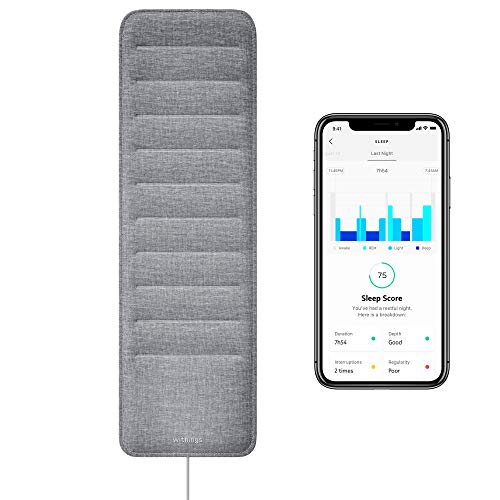
Wear nothing, charge nothing
Withings Sleep
If the goal is proof you slept, the tracker you'll never abandon beats the accurate one you stop wearing. A mat you forget exists gives you the trend without feeding the anxiety.
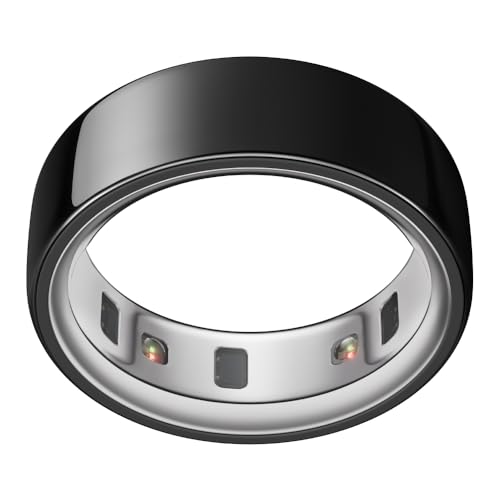
If you'll build the charging habit
Oura Ring 4
Most accurate at the number that reassures you: total sleep time. Screenless by design, so you read the weekly trend, not a 3am nightly verdict.
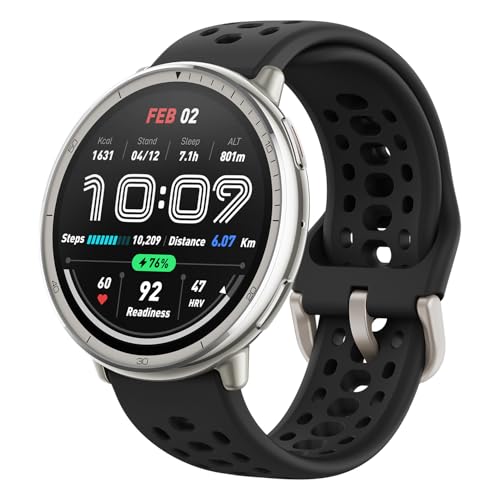
The number, not the graphs
Amazfit Active 2 Sport Smart Watch Fitness Tracker
You don't need lab-grade staging to be reassured you slept. A cheap band nails total sleep time and the weeks-long trend, which is the whole job here.
A few honest notes the box can't hold: the Withings mat's clinical apnea detection is a European feature and isn't marketed the same way on US units — treat it as a helpful breathing signal, not a diagnosis. The Oura is the most accurate wearable and has no screen to obsess over at 3am, but you take it off to charge, which is the exact ADHD failure mode (ring on the counter, night missed) — only get it if you'll build the habit, and know it needs a paid membership. The Amazfit is the honest budget answer: fine for total sleep time and the trend, genuinely unreliable at sleep stages, so ignore that pie chart (which you should be doing anyway).
This is exactly what this whole site is built on. ADHD is not a character flaw and it is not an excuse — it's a problem to solve, and problems have mechanisms, and mechanisms have levers. The 3am fog feels like proof that you're broken. It's actually just a stimulation-hungry brain, a late clock, and a misfiling error — three solvable things wearing the mask of one unsolvable one.
Start where everything here starts: fix your sleep first. Not because it's easy. Because it's the foundation the whole spiral is standing on — and it's the one you can kick out from under it.
Questions people actually ask
Why does it feel like I didn't sleep even though I did?
It's called sleep-state misperception (or paradoxical insomnia). You were actually asleep — an EEG would show it — but your brain logged hours of light sleep as continuous conscious thinking, so you underestimate how much you slept. Even healthy sleepers do this; they underestimate their sleep by over an hour when you remove the clock.
What is it called when your thoughts drift off on their own as you fall asleep?
That's hypnagogia — the transitional state between waking and sleep (light-sleep stage N1). Your thoughts become loose and autonomous while the part of your brain that steers and reality-checks them powers down. It's thought-like, not a full narrative dream, which is exactly why it feels like 'just my thoughts,' not dreaming.
Why do I wake up at 3am feeling like I never slept, with ADHD?
The second half of the night is lighter, easier-to-wake sleep, and your cortisol is rising. With ADHD, a delayed body clock means you spend longer in light, drifting sleep, and your stimulation-hungry brain fills the 3am silence with racing thoughts — so you surface, check the clock, panic, and can't get back down.
Is sleep-state misperception dangerous?
The single night isn't. The danger is the spiral: believing you barely sleep makes you dread bed, dread creates real hyperarousal, and hyperarousal turns subjective sleeplessness into genuine chronic insomnia — which then amplifies every ADHD symptom. Interrupting that loop early is the whole game.
Sources
- Hypnagogia: A systematic review (phenomenology and definition) — Journal of Sleep Research (2023)
- Paradoxical insomnia and subjective–objective sleep discrepancy: A review — Sleep Medicine Reviews (2018)
- The subjective–objective mismatch in sleep perception among healthy adults — Journal of Clinical Sleep Medicine (2012)
- The lapse of meta-awareness during mind-wandering — Psychonomic Bulletin & Review (2007)
- Delayed circadian rhythm in adults with ADHD and chronic sleep-onset insomnia — Biological Psychiatry (2010)
- Sleep in adults with ADHD: a systematic review and meta-analysis — Neuroscience & Biobehavioral Reviews (2018)
- The mind-wandering hypothesis of ADHD — Neuroscience & Biobehavioral Reviews (2018)
This is educational content and personal experimentation — not medical advice. Talk to your doctor before changing medication, supplements, or treatment. Full disclaimer.
The list
One protocol at a time, to your inbox.
No 30-day email courses. No PDFs you'll never open. When a protocol survives testing, you get the write-up. Unsubscribe anytime.