ADHD and Racing Thoughts at Night: The Protocol for a Brain That Won't Shut Off
It's 1am, you're exhausted, and your brain has 40 tabs open. Here's how to tell a racing mind from a shifted clock — and the exact wind-down sequence to run tonight.

As an Amazon Associate, TheADHQ earns from qualifying purchases. We only recommend hardware the mechanism itself would prescribe — and we'll tell you when you don't need to buy anything.
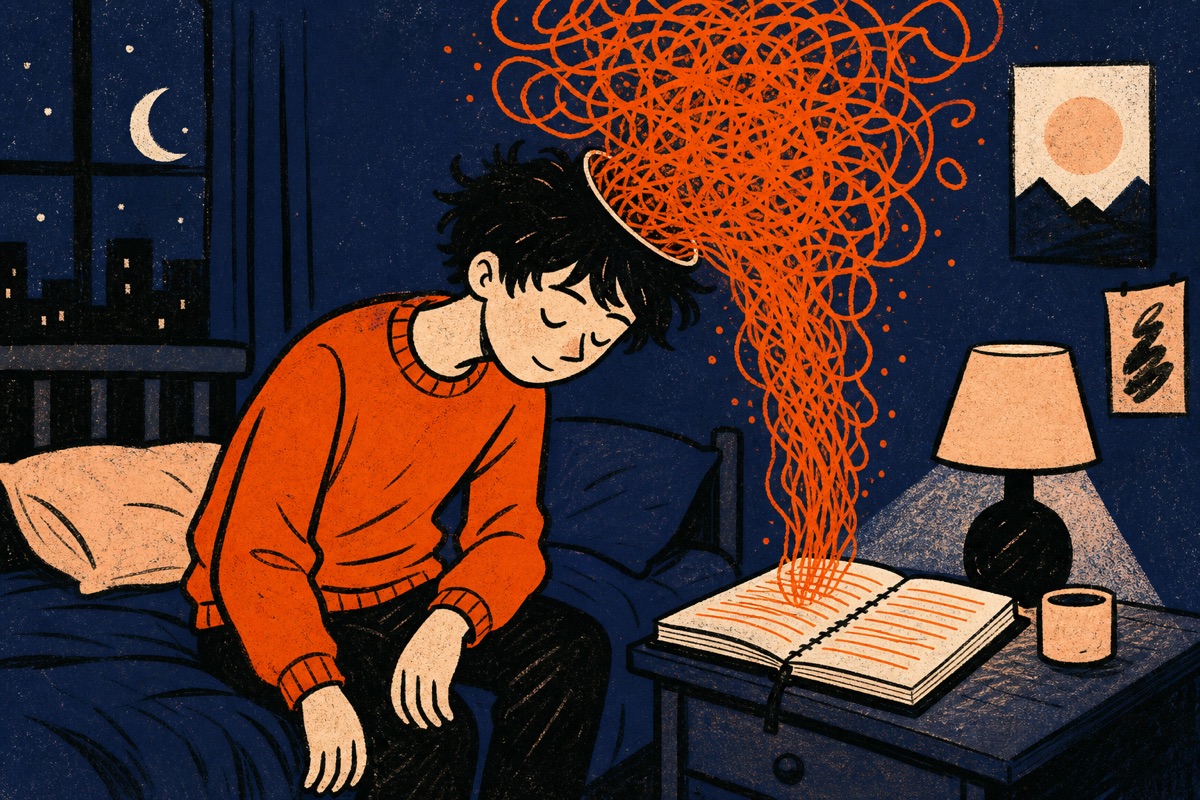
It's 1:47am. Your body is wrecked. And your brain has decided this is the moment to re-litigate a conversation from 2019, draft three business ideas, and remind you of everything due this week — simultaneously, on loop, at volume.
Every neurotypical sleep guide says the same useless thing: relax and clear your mind. You cannot clear this mind. That's the diagnosis. So we're not going to clear it — we're going to feed it something boring enough to sleep through.
If you read nothing else
- The racing isn't random: an under-stimulated ADHD brain manufactures its own input. A dark silent room is a stimulation vacuum, and your brain fills vacuums.
- First, run the self-diagnostic: shifted clock, loud mind, or both — the fixes are different.
- Tonight's sequence: externalize → load the senses → get up if it's not working. Numbered steps below.
- The get-out-of-bed rule feels wrong and is the best-evidenced move in behavioral insomnia treatment. Trust the evidence over the instinct.
First: which problem do you actually have?
Two different machines break in the ADHD night, and they need different repairs:
The shifted clock. Your melatonin arrives ~1.5 hours late; you're trying to sleep during biological daytime. Tell-tale: given total freedom (vacation, unemployment, holidays), you sleep fine — just 2am to 10am. If that's you, tonight's protocol is a bandage; the cure is moving the clock. Read the circadian mechanism tomorrow.
The loud mind (hyperarousal). Body exhausted, mind at a conference. Doesn't matter if it's 11pm or 3am — the moment input stops, the internal broadcast starts. That's tonight's target.
Most ADHD adults run both. Fix the clock on a weeks timescale, run this protocol on a tonight timescale.
The protocol
Step 1 — Externalize the tabs (10 minutes, not in bed)
Before bed, not in it: dump every open loop onto paper. Tasks, worries, the clever thing you should have said, the business idea. Two columns — needs action tomorrow and just noise. Then write tomorrow's first physical action (not "work on project" — "open the file").
This isn't journaling for wellness points. It's garbage collection. The ADHD brain re-surfaces open loops because it (correctly) doesn't trust your memory. Paper is the external memory it will actually accept. Ten minutes here buys back an hour of ceiling-staring.
Step 2 — Load the senses with a baseline
Here's the counterintuitive part: your brain needs some input to idle, or it makes its own. Give each restless channel something steady and boring:
- Ears: broadband noise — a fan, rain, proper non-looping noise. Loops are a trap; the ADHD brain finds the seam and starts tracking it.
- Body: weight or pressure, if your restlessness is physical — heavy duvet, weighted blanket. If your body is calm and only the mind races, skip this; it solves a problem you don't have.
- Mind: one low-stakes audio track — a book you've heard before, a dull podcast, sleep timer on. Familiar beats interesting: you need something the mind can hold loosely.
If the free version earns an upgrade:
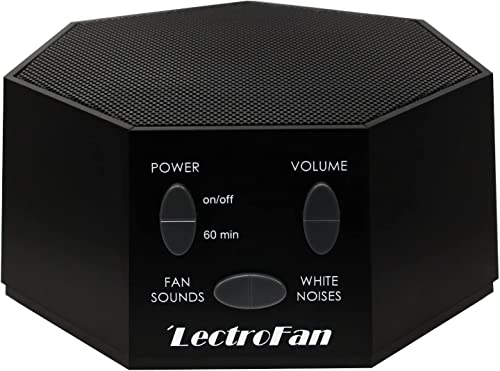
Adaptive Sound Technologies LectroFan Classic
Tested by JayThe standard answer for a brain that needs baseline input to idle.
- True non-looping noise — the ADHD brain latches onto loop seams in cheap machines
- Ten fan sounds and ten noise colors; find the one your brain accepts as 'nothing'
- No app, one dial, survives being knocked off the nightstand

Sivio Weighted Blanket
Works for a specific problem — physical restlessness at lights-out. Skip if that's not you.
- Deep-pressure input calms a nervous system that idles hot
- 100% breathable cotton — overheating will undo the benefit for hot sleepers
- Pick roughly 10% of body weight; heavier is not better
Step 3 — The 20-minute rule (the one everyone skips)
Still awake after roughly twenty minutes — don't clock-watch, estimate — get out of bed. Dim light, boring activity: fold laundry, read something dry, sit with the noise machine. Return only when actually sleepy. Repeat as many times as it takes, without drama.
This is stimulus-control therapy, and it's decades-deep in evidence. The logic: every hour spent awake and frustrated in bed teaches your brain that bed is the frustration place. ADHD brains, pattern-hungry as they are, learn this association fast — and unlearn it fast too, if you're consistent. It will feel like giving up. It's the opposite: it's refusing to train the wrong reflex.
Step 4 — Protect tomorrow morning anyway
Bad night or not: same wake time, light within the first hour. This is the move that keeps one bad night from becoming a bad week — sleeping in until 11 feels like recovery and is actually a clock-shift in exactly the wrong direction. Rough morning, but tomorrow night gets easier instead of harder.
The bigger picture
This protocol keeps you functional while the real fix — shifting your delayed clock — does its slow, boring work. And both sit inside the larger order of operations: Fix Your Sleep First, because a slept ADHD brain is the prerequisite for every other system you're going to build.
You're not broken. You're running the wrong protocol for the hardware. Tonight, run this one.
Questions people actually ask
Why won't my ADHD brain shut off at night?
An under-stimulated ADHD brain generates its own stimulation. In a dark, silent room there's no input, so the mind manufactures some — replays, plans, worries. It's not anxiety in every case; often it's a stimulation-hungry brain doing exactly what it does all day, minus the distractions.
How do I stop racing thoughts and fall asleep with ADHD?
Don't fight thoughts with stillness — give the brain a managed baseline instead. Externalize open loops onto paper, load the senses with steady input (broadband noise, pressure, cool room), and if you're still awake after ~20 minutes, get up and do something boring in dim light until sleepy. Repeat without drama.
Should I stay in bed if I can't sleep?
No. Lying awake teaches your brain that bed is where the awake-and-frustrated thing happens — that's the conditioning stimulus-control therapy exists to break. Get up, keep lights dim, do something genuinely boring, return when actually sleepy. It feels counterproductive and it's the single best-evidenced behavioral move in insomnia treatment.
Is it racing thoughts or delayed sleep phase?
Quick test: with no alarm and no schedule — vacation conditions — do you eventually sleep well, just on a late schedule? That points to a delayed clock. If sleep stays broken even at 3am, or your body is tired but your mind is loud at any hour, hyperarousal is the bigger player. Many ADHD adults have both.
Sources
- Insomnia Disorder in Adult Attention-Deficit/Hyperactivity Disorder Patients: Clinical, Comorbidity, and Treatment Correlates — Frontiers in Psychiatry (2021)
- Understanding and Treating Insomnia — Annual Review of Clinical Psychology (2011)
- Delayed circadian rhythm in adults with attention-deficit/hyperactivity disorder and chronic sleep-onset insomnia — Biological Psychiatry (2010)
This is educational content and personal experimentation — not medical advice. Talk to your doctor before changing medication, supplements, or treatment. Full disclaimer.
The list
One protocol at a time, to your inbox.
No 30-day email courses. No PDFs you'll never open. When a protocol survives testing, you get the write-up. Unsubscribe anytime.