About Jay
“You have ADHD?
My ass.”

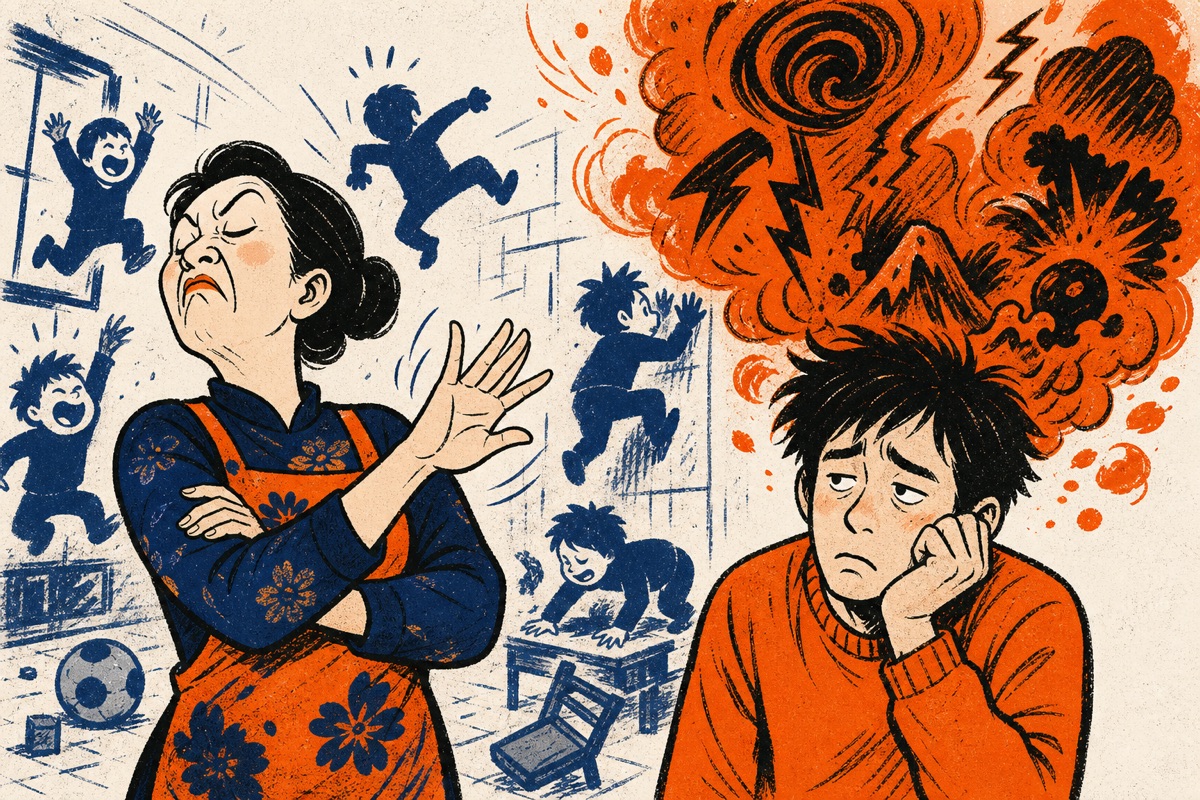
My name is Jay Qin. I studied Business & Finance at Carnegie Mellon, worked on Wall Street, and have shipped more than 50 AI projects since. When I was 26, I finally told my mother I had ADHD. Her immediate response, in Chinese:
“你有个屁多动症.”
(“You have ADHD? My ass.”)
She wasn't trying to hurt me. She genuinely believed I couldn't have it — because in Chinese, ADHD is commonly translated as 多动症: literally, “hyperactivity disorder.” To her, ADHD meant one thing: kids running around the classroom, screaming, climbing furniture, unable to sit still.
I wasn't that kid. And my mother is a childcare teacher. She'd spent decades around children and was certain she knew exactly what ADHD looked like.
She was wrong. I didn't speak to her for two years.
The problem isn't my mom
The problem is that millions of people — parents, teachers, employers, entire languages — still think ADHD means being physically hyperactive. Many of us aren't constantly moving. We're constantly thinking. The mind never stops. The attention never settles. The brain is always hunting for the next source of stimulation. Hyperactivity isn't always visible; sometimes it's entirely internal.
And here's the cruelest part: when you spend thirty years learning — through trial, error, and sheer pain — to mask it and manage it, your reward is that nobody believes you have it. You get punished for coping.
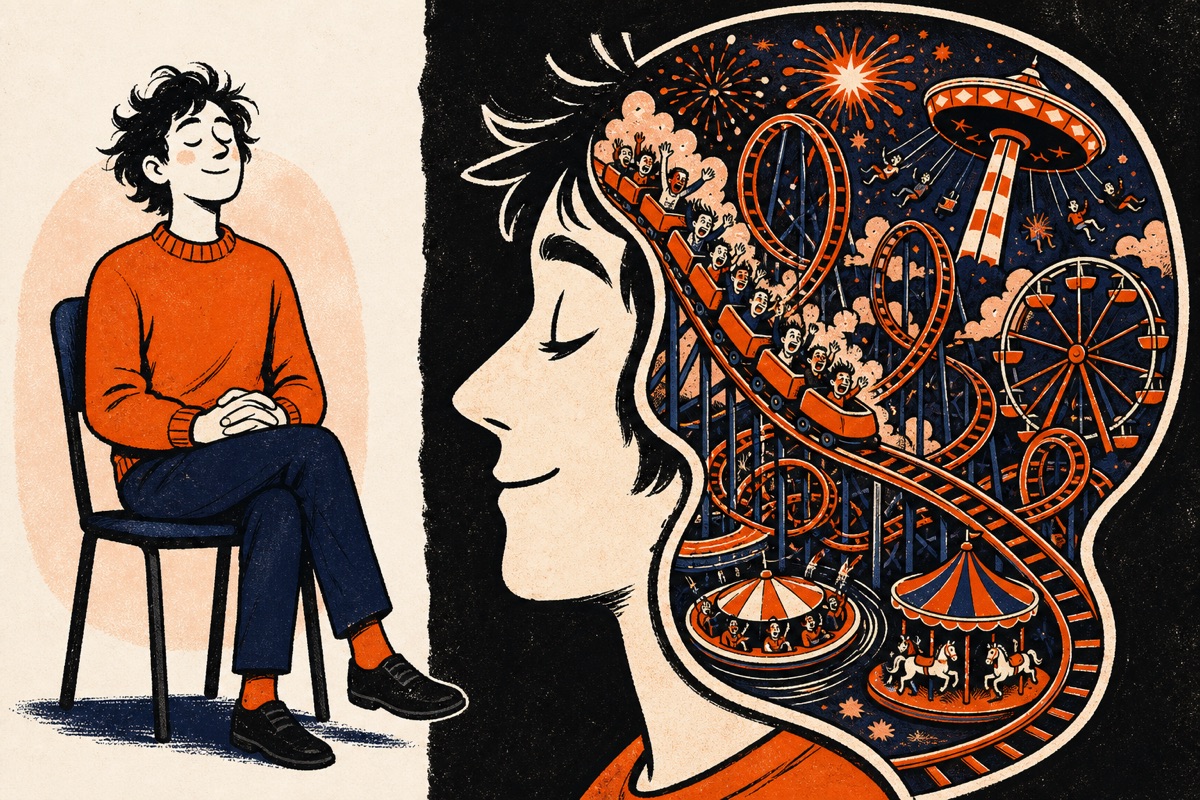
What people see
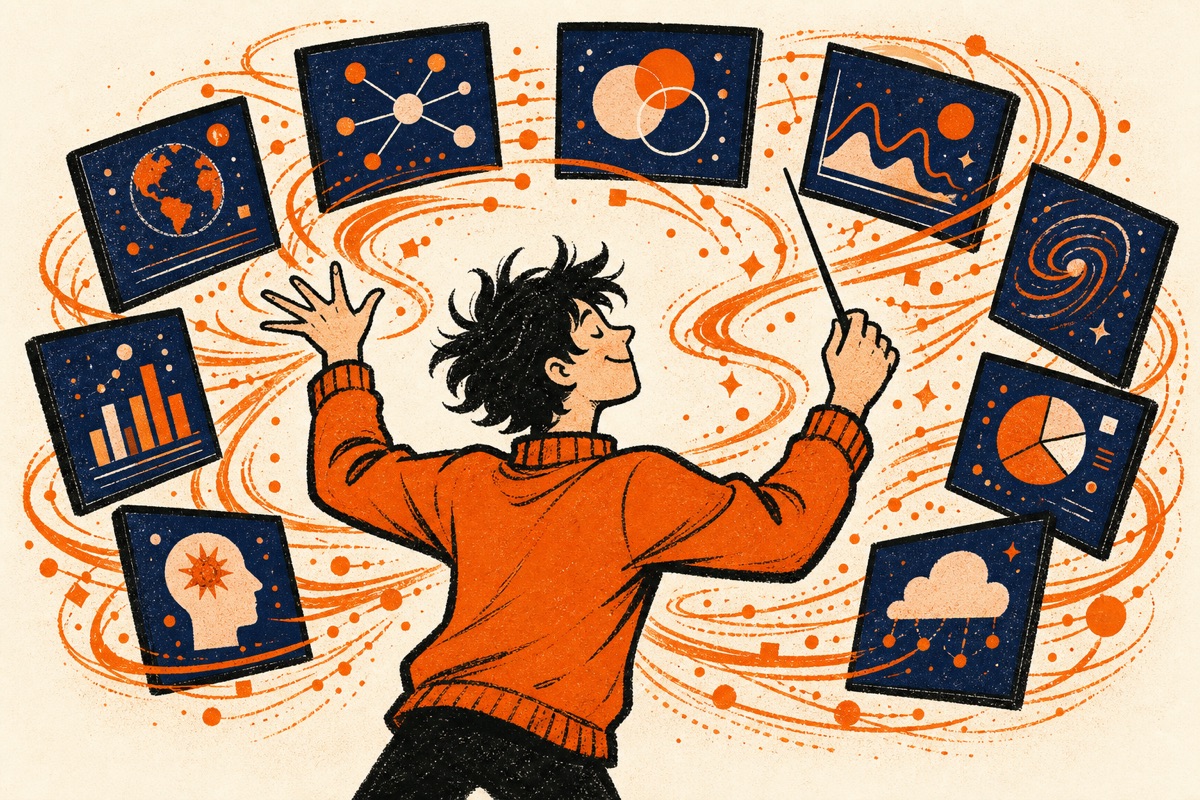
Today I run more than ten businesses from one laptop. On a typical day my MacBook has eight terminal windows open at once. Constant context-switching across products, code, operations, and writing — the exact thing that makes a conventional job feel like a cage is the thing that makes this workload possible.
People see that and say: “you're so productive.”
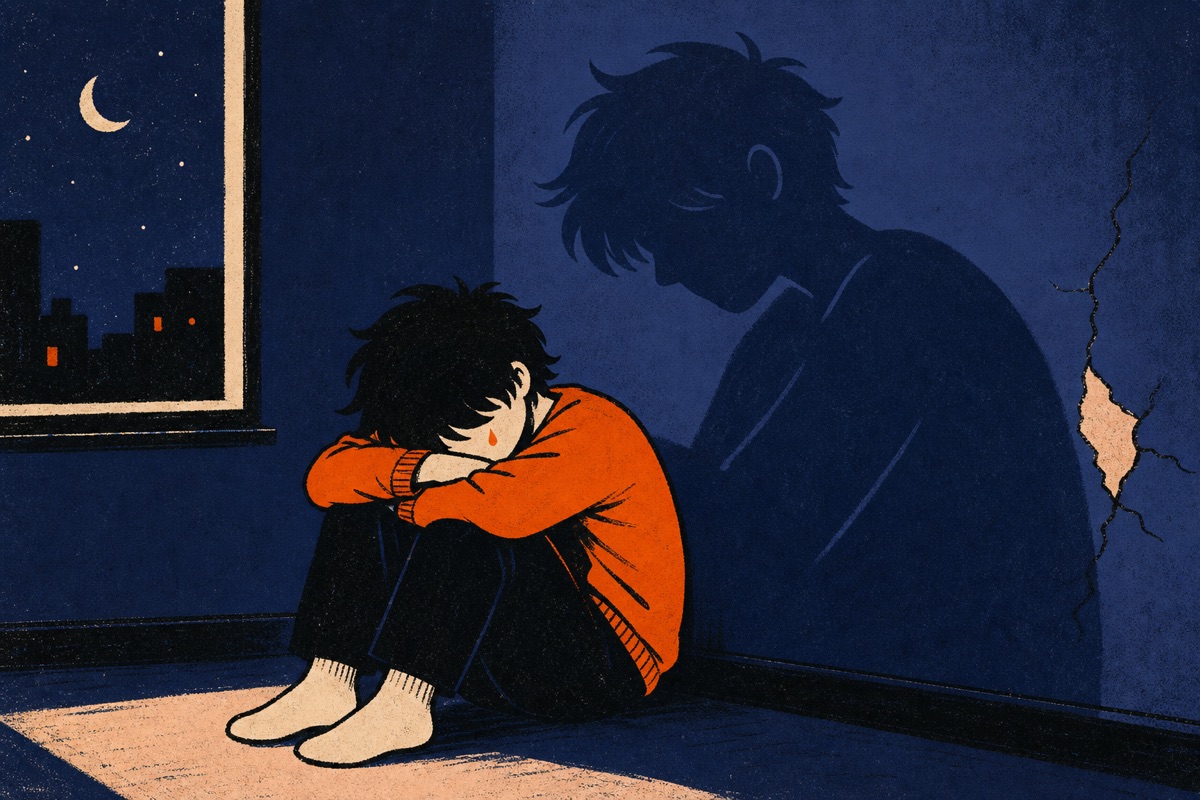
What they don't see
They don't see the decades it took to get here. The destroyed relationships. The silent tears at night. The wall I punched that nobody understood. The dark thoughts that show up uninvited even when you're trying with everything you have to stay positive. The emotional outburst at the person you love most — followed ten minutes later by “hey, I'm fine now, I'm sorry,” genuinely believing that resets the damage. It doesn't. Ask anyone who's loved someone with unmanaged ADHD.
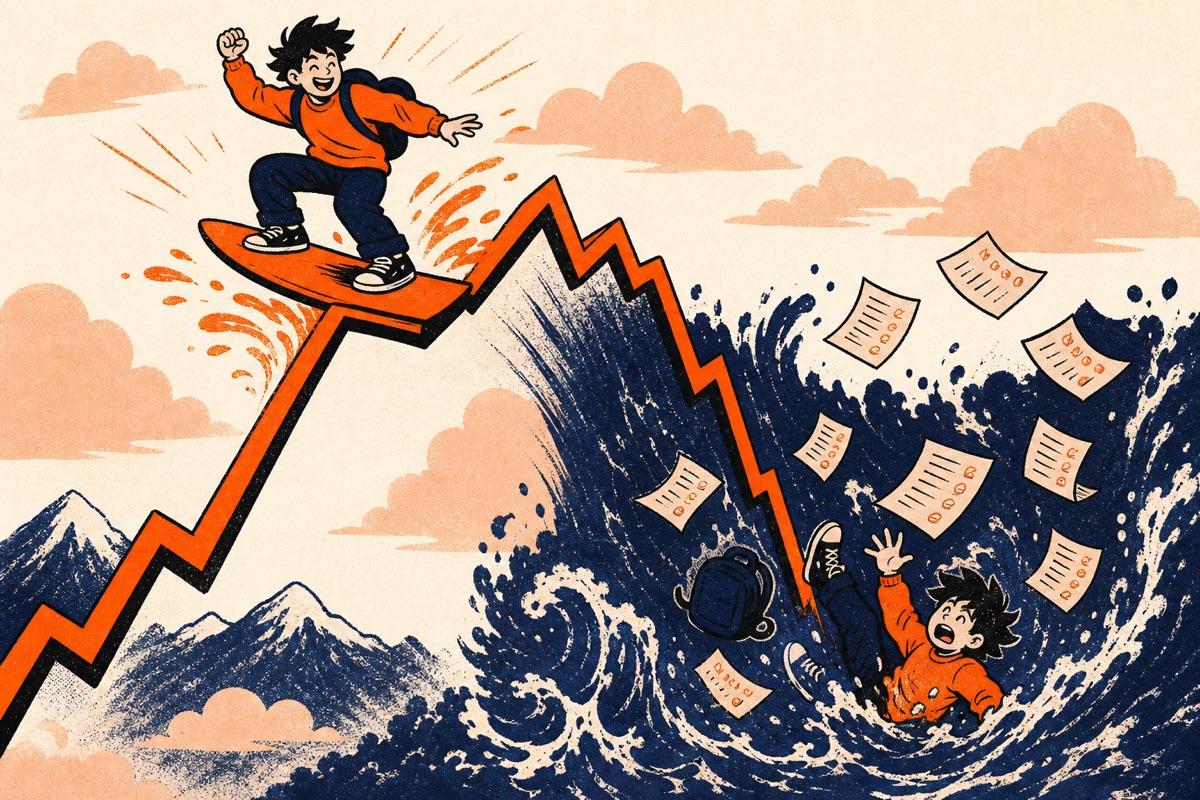
They don't see the grades, either. Every new subject: ace the first test, get bored, stop keeping notes, crater the rest of the year — while the teacher who called you brilliant looks at you like a broken promise. I was the kid solving the worksheet before the teacher finished explaining it, and failing the final anyway.
None of that was laziness. It was an unmanaged brain, running an unmanaged clock, chronically under-slept, self-medicating with stimulation.
The $30 million morning
Here's the story that made this site inevitable.
On Wall Street, I got a new boss. Regime change. New bosses bring their own people — so unless I performed, visibly, I was already on the way out. I knew it. And my ADHD answer to that pressure was pure hyperfocus, aimed at exactly the wrong target: I became obsessed with being the first person in the gym every morning. First in the gym, first at the desk, silent grit. I cut sleep to make it happen and told myself that was discipline.
Then one morning, running on that empty tank, I fat-fingered a $30 million trade. It cost my senior trader about $50,000 in profits — in seconds. Seconds. Years of “I'll prove them wrong” erased faster than I could say the word undo. Not long after, I was gone.
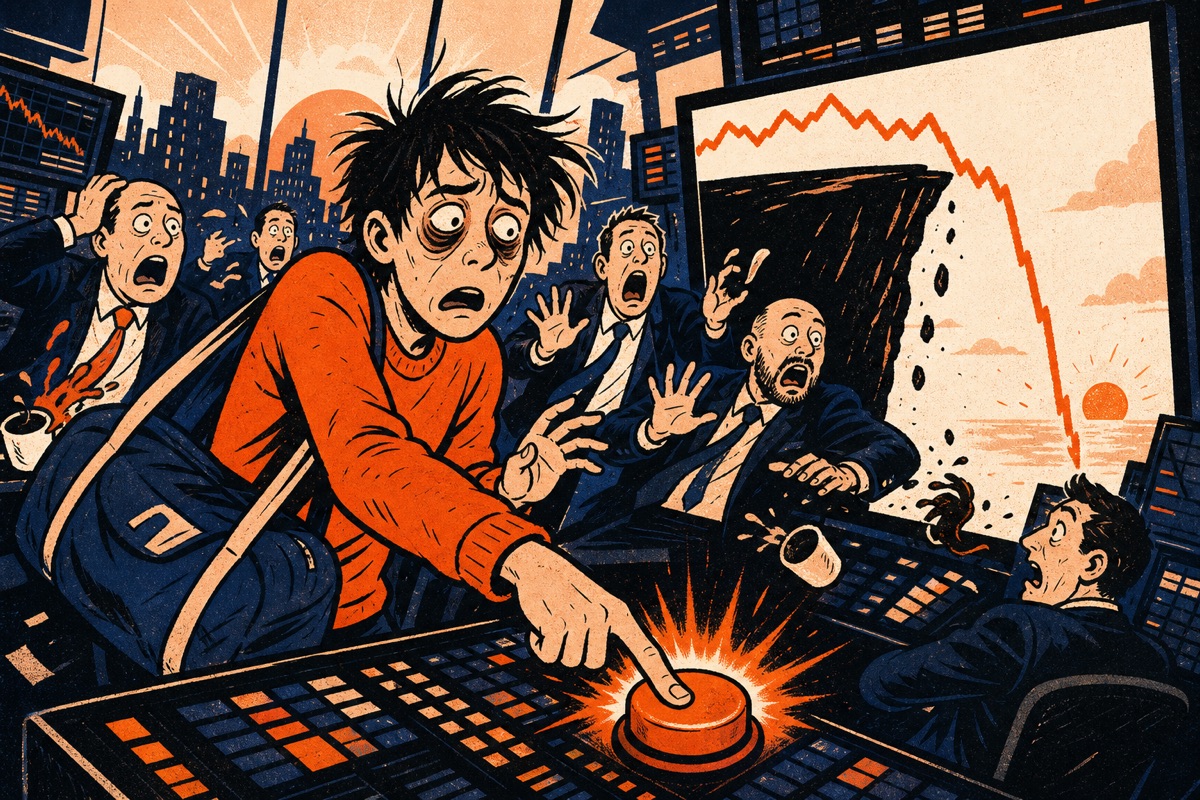
Here's the part that took me years to admit: the trade wasn't the failure. The failure came weeks earlier, in every shortened night. A sleep-deprived ADHD brain didn't just lose concentration — it got angry. Hyperfocused and angry at the same time. It dressed the whole thing up as a story about superiority: my silent grit makes me better, and if people can't appreciate that, that's on them. That's not grit. That's an exhausted brain defending its own bad decisions.
I was so fixated on winning the morning that I lost the job. This is why I will keep saying it until you're sick of it: for people with ADHD, sleep is the first problem to solve. Not the gym. Not the grind. Sleep.
Why sleep is step one
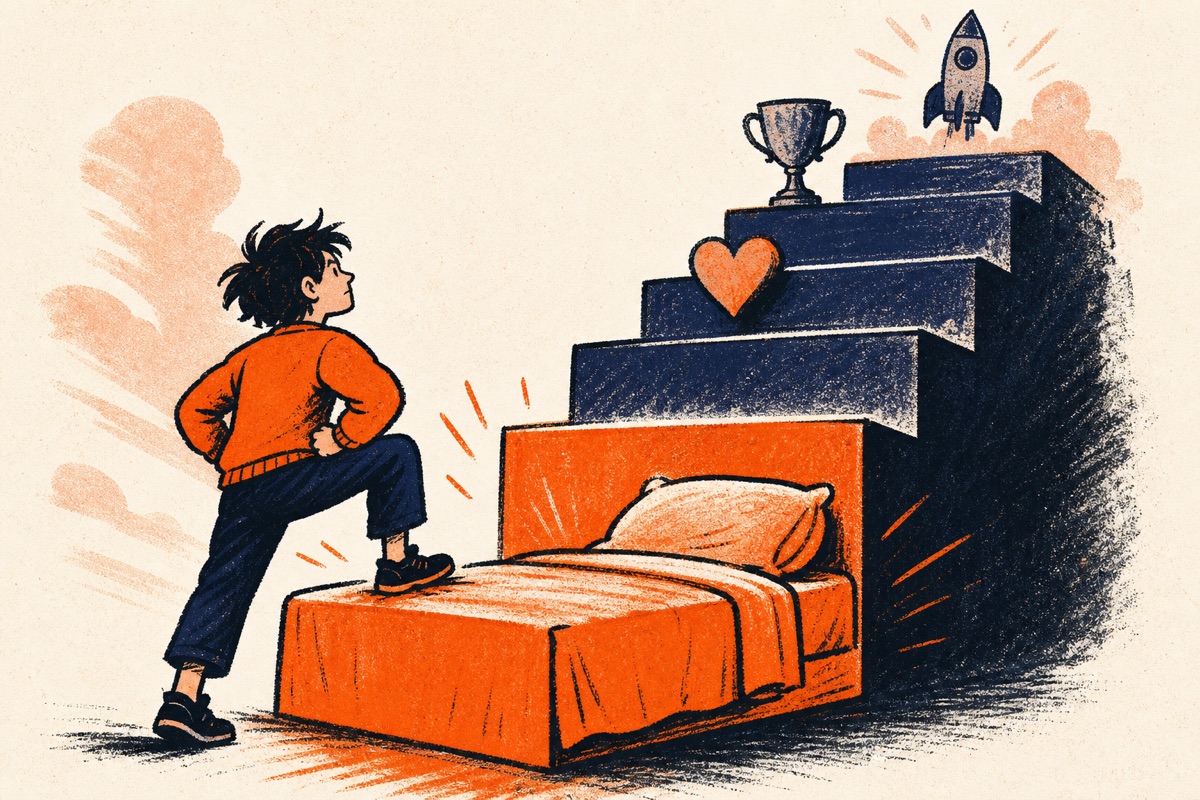
It took me almost 31 years to see it: the foundation under every ADHD failure spiral in my life was sleep. A normal brain that can't sleep gets stressed. An ADHD brain that can't sleep gets stressed andgoes hunting for stimulation — at 2am, with impulse control already offline. That's how you end up hooked on things you never chose. You never get to the root, because the root looks too boring to be the answer: just sleep.
What this site is
- Mechanism-first.Not “17 tips” — the actual physiology, explained in terms you can't unsee, cited to primary research.
- n=1 tested. I run every protocol on myself with real sleep and HRV data before writing it up. Personal data is always labeled as personal.
- Honest about money. Products get recommended only when the mechanism itself would prescribe them — and I will tell you when the $0 version is fine.
- Assertive on purpose. If advice is hedged, an ADHD reader is already gone. One clear instruction, one mechanism, one source.
What this site is not
Medical advice. A supplement store. A place where ADHD is a personality trait, a superpower, or an excuse. It's a problem — a solvable one. To be solved by the people who have it, the parents raising kids with it, the teachers who see the quiet kid whose mind won't stop, and the employers who wonder why their sharpest person can't do the boring parts.
I don't want anyone to spend thirty years misunderstanding themselves the way I did.
Start where I should have started: fix your sleep.
If dark thoughts are more than passing visitors: that's not a productivity problem, and this site is not the tool. Call or text 988 (US) or your local crisis line. Then come back — the rest can wait.
The list
One protocol at a time, to your inbox.
No 30-day email courses. No PDFs you'll never open. When a protocol survives testing, you get the write-up. Unsubscribe anytime.