Fix Your Sleep First: The ADHD Order of Operations
Two-thirds of ADHD adults report insomnia symptoms, and every other fix fails on top of them. Why sleep is step one — and why the usual advice fails your brain.

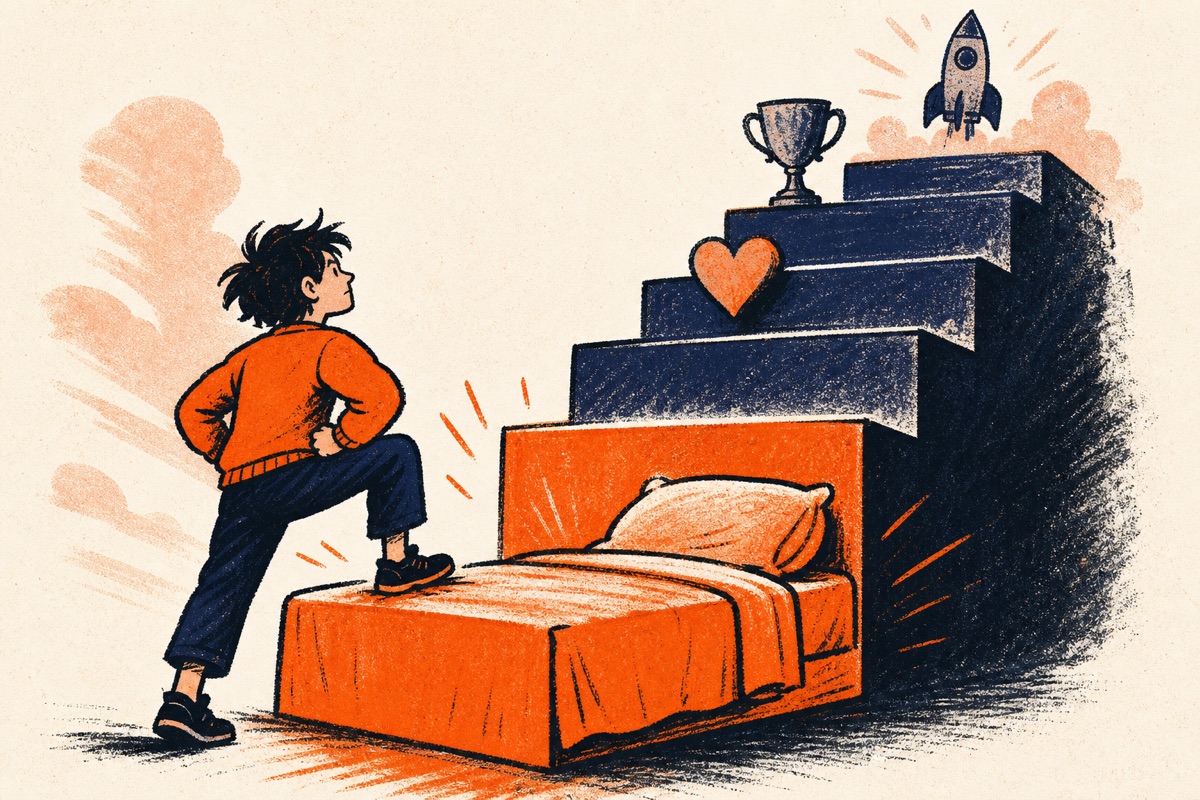
You've tried the systems. The planners, the apps, the accountability partners, the color-coded everything. They worked for eleven days.
Here's the thing nobody put at the top of the list: if you have ADHD and you sleep badly, no system will hold. Not because you lack discipline — because you're asking a sleep-deprived brain to run executive functions it can barely run well-rested.
Sleep is step one. Not a wellness suggestion. Step one.
If you read nothing else
- Roughly two-thirds of adults with ADHD report insomnia symptoms (63.9% in clinical study; 44.4% meet full insomnia-disorder criteria) — a core feature of the condition's ecosystem, not bad luck.
- Sleep deprivation degrades impulse control, working memory, and emotional regulation — the exact functions ADHD already taxes. It's a multiplier on every symptom.
- The ADHD sleep problem is mostly a shifted body clock plus a stimulation-hungry brain, which is why generic sleep hygiene advice keeps failing you.
- Fix order: understand the mechanism → shift the clock → survive tonight. In that order. Start Here lays out the sequence.
The numbers, so you know this isn't a you-problem
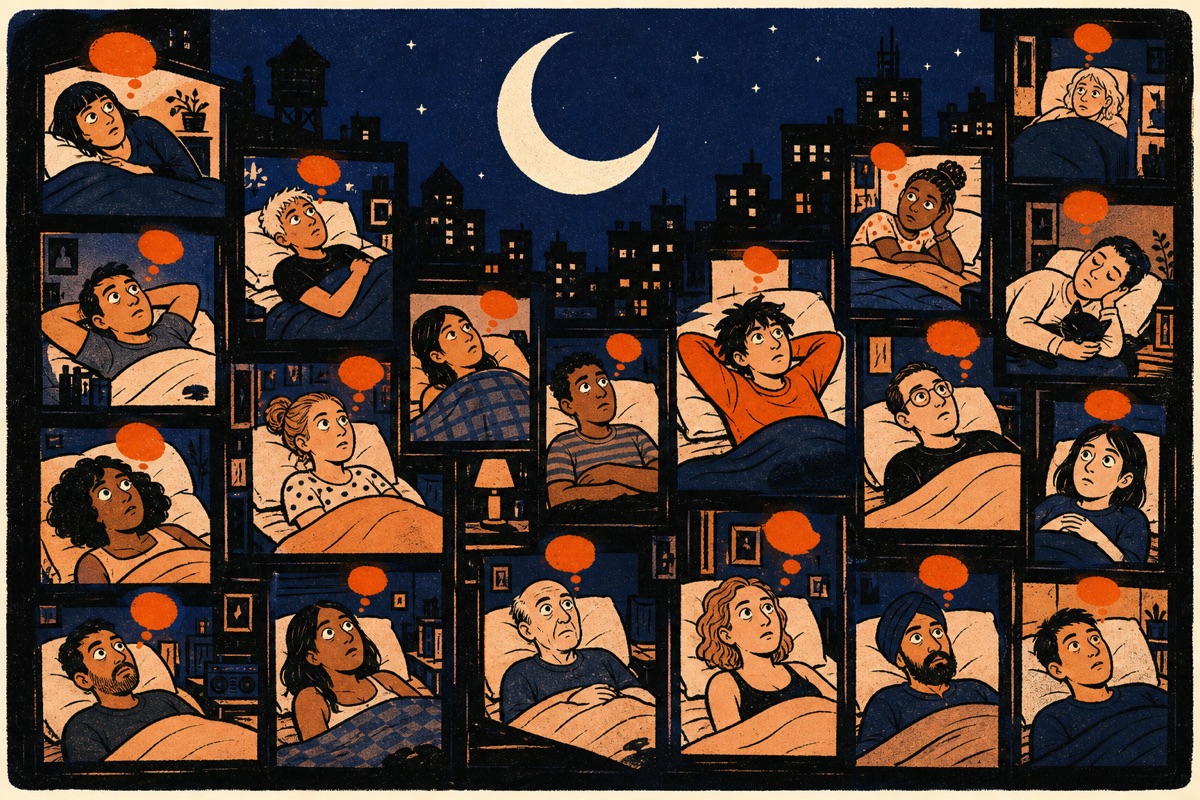
An estimated 15.5 million U.S. adults have an ADHD diagnosis, and about half were diagnosed in adulthood — a generation of people who spent decades being called lazy first.
Within that group, sleep isn't a side issue. A 2021 clinical study found insomnia symptoms in 63.9% of adult ADHD patients — and full DSM-5 insomnia disorder in 44.4%. A Swedish register study covering 6.5 million people found that 47.5% of individuals with ADHD had been prescribed sleep medication, against 7.5% carrying a formal sleep disorder diagnosis — meaning the problem is even more medicated than it is named. Reviews keep landing in the same place: sleep-onset problems, delayed sleep timing, and short sleep are dramatically more common in ADHD across the entire lifespan, medicated or not.
Roughly two out of three. If ADHD advice were honest, every guide would open with sleep. Instead it's chapter nine, after the bullet journals.
Why bad sleep hits an ADHD brain harder
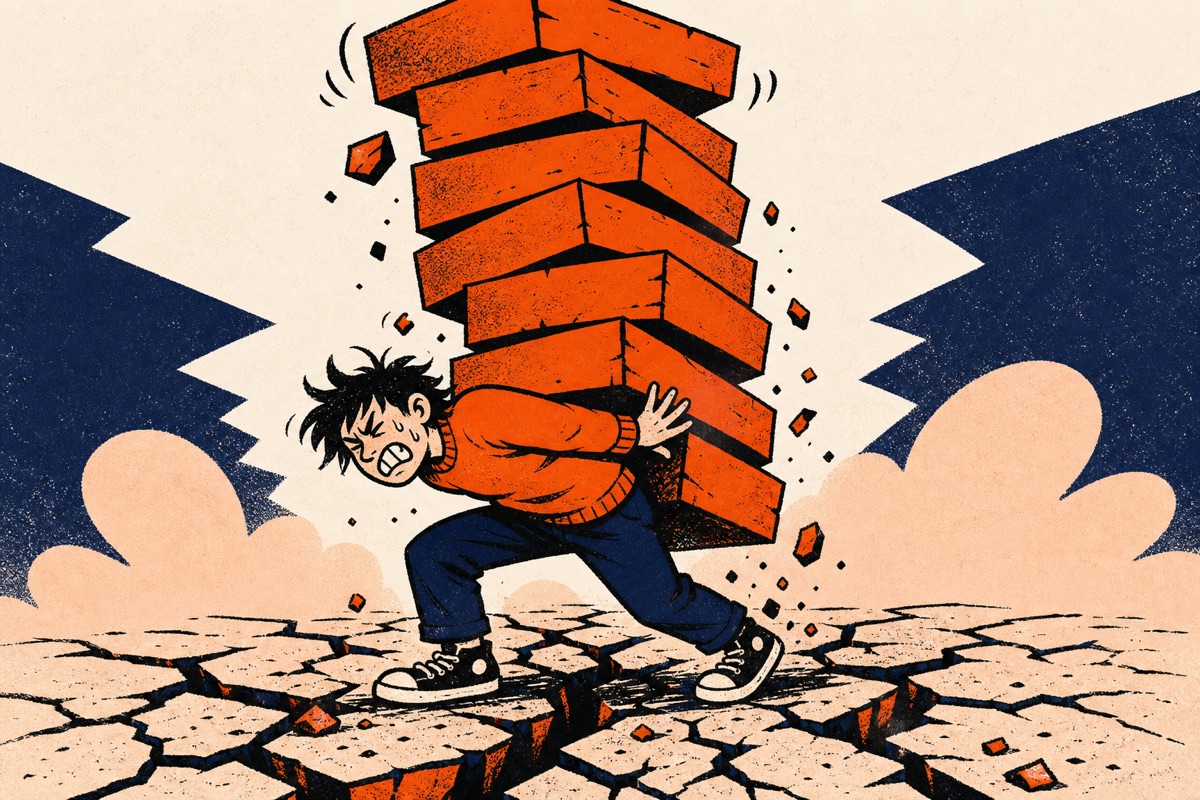
When a neurotypical person doesn't sleep, they get cortisol, brain fog, and a bad mood.
When you don't sleep, you get all of that plus a brain that demands baseline stimulation. That's the core ADHD trade: an under-aroused brain will manufacture its own input. Tired and wired, at 1am, with impulse control already offline, your brain goes shopping for dopamine — scrolling, gaming, porn, food, one more episode, one more anything.
Then tomorrow arrives. You're exhausted, so you're more distractible, so tasks slip, so you stay up late to reclaim the day (that's revenge bedtime procrastination, and with ADHD it has real teeth), so you sleep worse. The loop feeds itself. Most of what you hate about your ADHD — the temper, the abandoned projects, the 2am shame spiral — runs hotter every single day this loop spins.
Break the loop at sleep, and everything downstream gets easier. Not easy. Easier — and possible.
Why the standard advice failed you
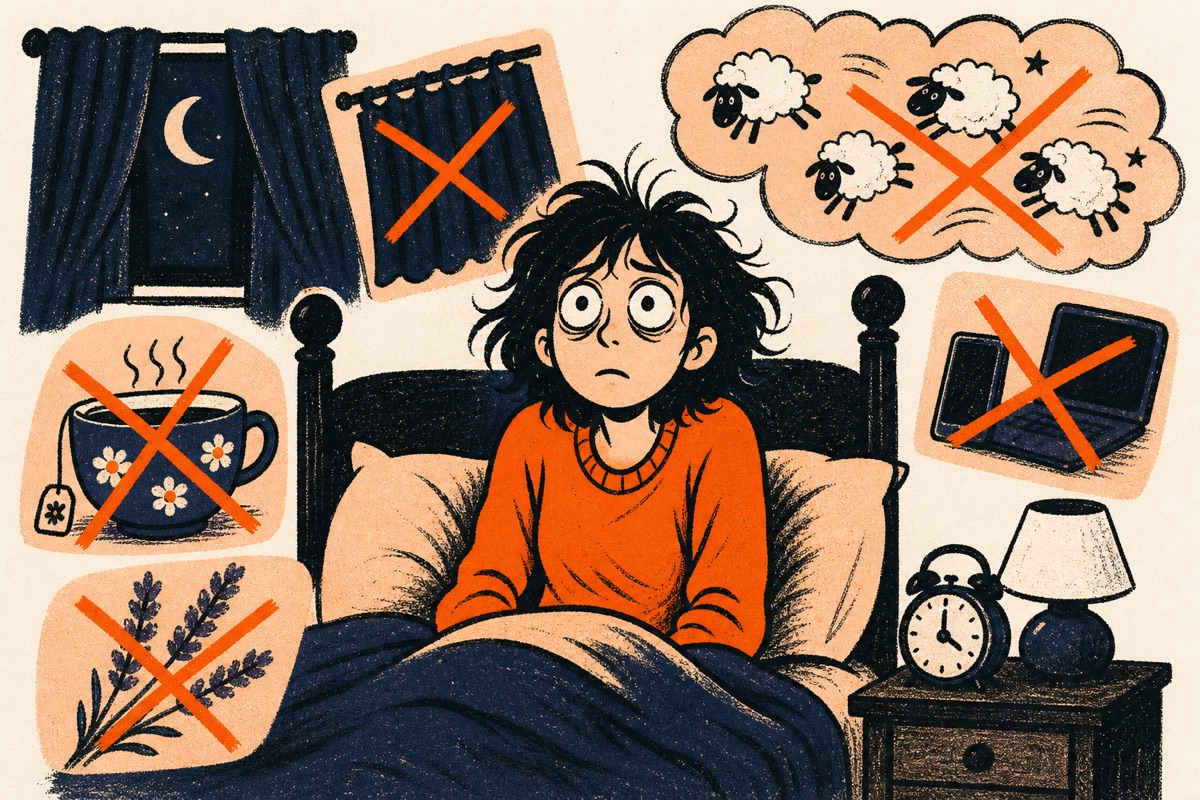
You've read "no screens an hour before bed" fifty times. You've bought the blackout curtains. It didn't work, and then you blamed yourself, which is exactly backwards.
Generic sleep hygiene assumes your problem is bad habits around a normal clock. The ADHD sleep problem is usually neither:
-
Your clock itself is shifted. In ADHD adults with sleep-onset insomnia, melatonin — the biological "prepare for sleep" signal — arrives on average about an hour and a half later than in non-ADHD adults. You're not refusing to sleep at 11pm; your body is genuinely not ready. This is closer to delayed sleep phase disorder than to bad discipline, and it responds to clock-shifting tools (light timing above all), not to willpower. Full mechanism here: Why your brain won't sleep until 3am.
-
Your brain won't idle quietly. A normal brain in a dark room drifts. Your brain, given no input, generates input — the racing replay of every conversation since 2019. Wind-down for ADHD means giving the brain a managed baseline of stimulation, not zero stimulation. Tonight's version of that: the racing-thoughts protocol.
Screens-off-at-9 addresses neither mechanism. That's why it failed. You didn't.
The real keyword: controlled stimulation
Here's the idea that ties the whole thing together, and it's worth slowing down for.
One influential model of ADHD says your brain runs under-stimulated — below the level it needs to regulate itself — so it constantly reaches for more input to get there. That reaching is the fidgeting, the tab-hopping, the 2am idea-storm. It's not you being difficult. It's a brain trying to get to its own baseline.
Now look at what ADHD medication does, in principle. A stimulant raises dopamine and norepinephrine in the prefrontal cortex — and at the right level, those chemicals sharpen the brain's signal-to-noise so it can focus. The important part everyone misses: it's not "more is better." The dose-response is an inverted U — too much is as impairing as too little. Medication doesn't just crank the volume up; it delivers a controlled amount of stimulation, tuned to the sweet spot.
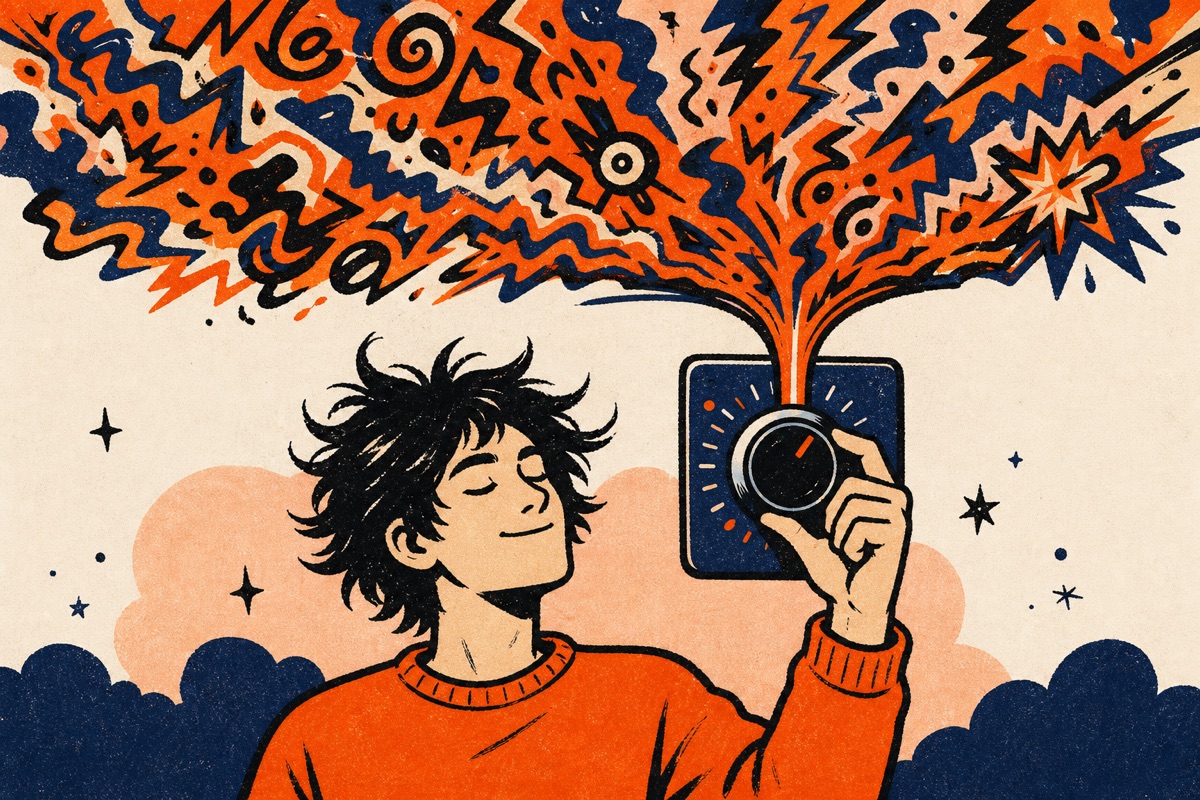
That's the keyword. Controlled stimulation. Not zero (that's the silent room your brain rebels against), and not a chaotic flood (that's doomscrolling). A steady, tuned, boring amount — enough to keep the brain at baseline without spinning it up.
And here's the useful part: medication isn't the only way to deliver controlled stimulation. Your brain will also take it from movement, from a cold shower, and — the one that matters for sleep — from steady, featureless sound. In a silent bedroom your brain manufactures its own stimulation (racing thoughts). Give it a controlled external source with nothing to grab onto — a fan, rain, broadband "white" noise — and it has somewhere to rest instead.
One line you will not hear from me: that you can swap your prescription for a fan. Non-drug controlled stimulation — movement, sound, sensory input — can be a genuinely useful adjunct, but the evidence does not show it replaces medication for the core symptoms of ADHD. In the largest head-to-head trial, medication outperformed intensive behavioral treatment for core symptoms (MTA, 1999). Anyone weighing starting, stopping, or substituting ADHD treatment should do that with a clinician — not a blog. What this article gives you is a lever anyone can pull tonight, on top of whatever else you're doing.
The order of operations
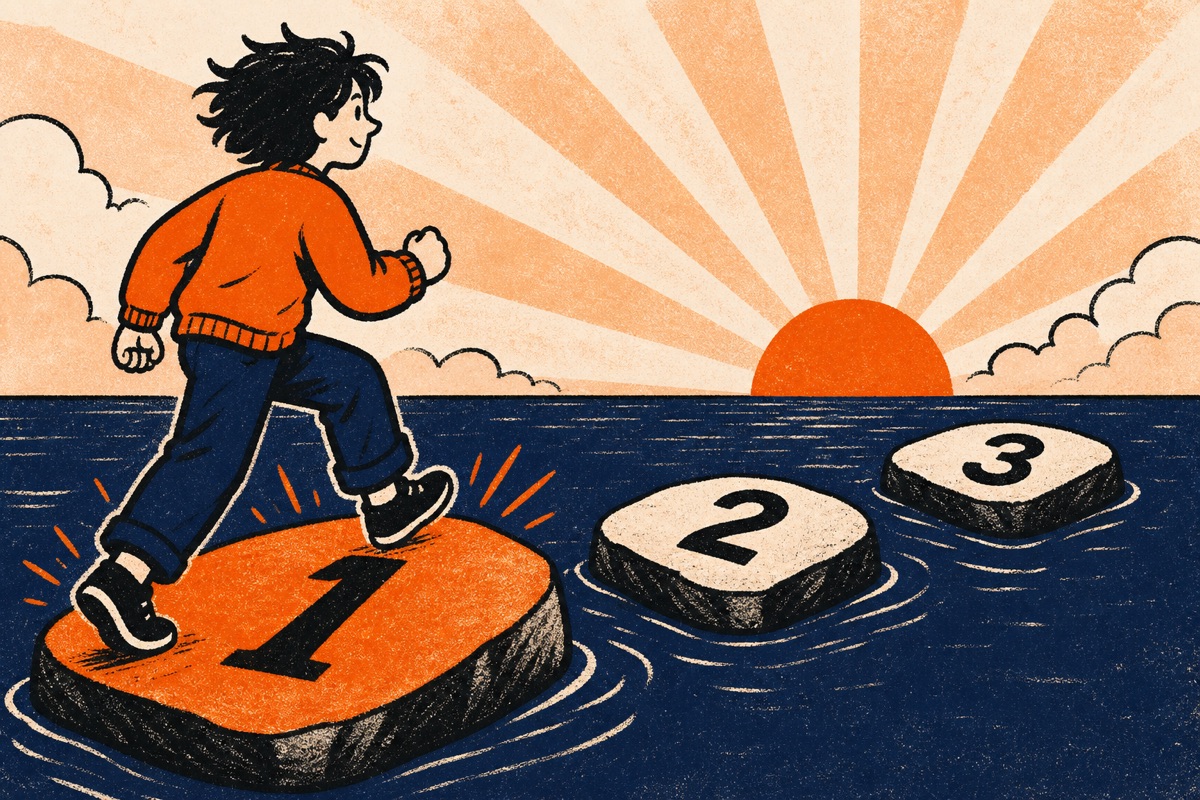
First, understand your clock. Read the circadian mechanism. Twenty minutes, and bedtime stops being a nightly morality test. This reframe alone is worth more than every tip list you've saved.
Second, shift the clock. Morning light, consistent wake time, evening light restriction. These are the levers that actually move a delayed phase. They take two to four weeks, they're boring, and they work — which makes them the least ADHD-friendly and most ADHD-necessary intervention in existence. Why boring beats heroic — and how to hold a schedule with a brain built for intensity — is its own mechanism: intensity doesn't replicate.
Third, have a tonight-protocol. The clock shift is slow; tonight still happens. A fixed wind-down sequence — externalize the thoughts, load the senses with a managed baseline, get out of bed if sleep doesn't come — keeps single bad nights from becoming bad weeks.
One lever inside that protocol is worth naming on its own: temperature. Sleep onset rides your core body temperature falling, and your body dumps that heat through your hands and feet. A warm bath one to two hours before bed shortened sleep onset across 13 studies — you warm up in order to cool down, which is exactly backwards from instinct and completely free. That's the ADHD cooldown problem.
Notice what's not on this list: buying anything. The mechanism runs on light, timing, and behavior. Hardware can make it more pleasant. It's optional.
What about just taking something?
Most people try this before they try the order of operations, so let's deal with it honestly rather than pretend it isn't on the table.
The problem isn't that sleep drugs don't work. It's that "it knocked me out" and "I slept well" are different measurements, and they come apart. In a placebo-controlled trial, one benzodiazepine cut deep sleep while the people taking it rated their sleep as better. That gap is the whole issue, and it's why the pill that feels most effective is a bad guide to what's actually happening: sedation is not sleep.
If you get down fine and surface at 3am anyway, that's a specific mechanism with a specific explanation — and it has nothing to do with willpower. A drug's half-life describes how long it lingers in your body, not how long it works on your brain, and for some sedatives those numbers differ by a factor of five: why your sleeping pill quits before you do.
And if an antihistamine is the one thing that reliably works, check the boring explanation first. Your bed is where dust mite exposure peaks, and allergic sleep disruption is common, mechanical, and treatable — whereas the brain-chemistry version of that theory has no test and no treatment: test your nose first.
Anything you're taking nightly to sleep belongs in a conversation with a doctor, not a decision you keep re-making alone at 11pm.
Where this is going
I spent almost 31 years finding out that the root of my worst ADHD spirals was the most boring possible answer: sleep. Every protocol on this site gets tested on my own brain, with my own sleep and HRV data, before it gets written up — because the gap between "sounds right" and "survives contact with an actual ADHD life" is where most advice dies. The full story is here.
ADHD is not an excuse. It's a problem to solve. This is where you start solving it.
Next: Why your brain won't sleep until 3am — the circadian mechanism →
If you'd rather see the whole map before picking a step — every mechanism behind ADHD sleep problems, each one labelled with how strong its evidence actually is — that's ADHD and sleep. And if the tiredness has already become the whole texture of your life rather than a bad month, start with ADHD burnout and exhaustion instead.
Questions people actually ask
Why can't I sleep even though I'm exhausted with ADHD?
Because ADHD sleep trouble usually isn't tiredness — it's a delayed body clock plus an under-stimulated brain. Your melatonin arrives late, so you're not biologically ready for sleep, and a silent dark room gives your stimulation-hungry brain nothing, so it manufactures racing thoughts. Exhaustion and sleeplessness coexist.
Why is sleep the first thing to fix with ADHD?
Sleep deprivation degrades exactly the functions ADHD already weakens: impulse control, working memory, emotional regulation. Fixing sleep doesn't cure ADHD, but every other intervention — medication, exercise, systems — works measurably better on a slept brain, and most fail without it.
How common are sleep problems in adults with ADHD?
Extremely. Clinical studies find insomnia symptoms in about two-thirds of adult ADHD patients, with 44% meeting full insomnia-disorder criteria — several times the general-population rate. A Swedish register study of 6.5 million people found nearly half of individuals with ADHD had been prescribed sleep medication.
Why doesn't normal sleep hygiene advice work for ADHD?
Because most of it targets bad habits, and the dominant ADHD sleep problem isn't a habit — it's a delayed circadian clock plus a brain that generates its own stimulation when under-stimulated. Advice that ignores those two mechanisms fails, no matter how diligently you follow it.
Does ADHD medication cause the sleep problems?
Stimulants can affect sleep, especially when dosed late, but the sleep problems mostly precede medication: delayed melatonin onset and evening-type chronotype show up in unmedicated ADHD adults and children too. Talk to your prescriber before changing anything.
Sources
- Insomnia Disorder in Adult Attention-Deficit/Hyperactivity Disorder Patients: Clinical, Comorbidity, and Treatment Correlates — Frontiers in Psychiatry (2021)
- Delayed circadian rhythm in adults with attention-deficit/hyperactivity disorder and chronic sleep-onset insomnia — Biological Psychiatry (2010)
- Attention-Deficit/Hyperactivity Disorder Diagnosis, Treatment, and Telehealth Use in Adults — United States, October 2024 — CDC MMWR (2024)
- Adult Attention-Deficit/Hyperactivity Disorder (ADHD) and Insomnia: an Update of the Literature — Current Psychiatry Reports (2017)
- Prevalence of sleep disorder diagnoses and sleep medication prescriptions in individuals with ADHD across the lifespan: a Swedish nationwide register-based study — BMJ Mental Health (2023)
- Optimal stimulation: a model of disordered activity and performance in normal and deviant children — Psychological Bulletin (1983)
- Catecholamine influences on prefrontal cortical function: relevance to treatment of ADHD — Pharmacology Biochemistry and Behavior (2011)
- Listen to the noise: noise is beneficial for cognitive performance in ADHD — Journal of Child Psychology and Psychiatry (2007)
- Systematic Review and Meta-Analysis: Do White Noise or Pink Noise Help With Task Performance in Youth With ADHD? — J Am Acad Child Adolesc Psychiatry (2024)
- Noise as a sleep aid: A systematic review — Sleep Medicine Reviews (2021)
- A 14-month randomized clinical trial of treatment strategies for ADHD (the MTA study) — Archives of General Psychiatry (1999)
- A double-blind study in healthy volunteers to assess the effects on sleep of pregabalin compared with alprazolam and placebo — Sleep (2005)
- Pharmacokinetic and electroencephalographic study of intravenous diazepam, midazolam, and placebo — Clinical Pharmacology & Therapeutics (1989)
- The relationship between allergic rhinitis and sleep disorders and mental health — Frontiers in Allergy (2026)
This is educational content and personal experimentation — not medical advice. Talk to your doctor before changing medication, supplements, or treatment. Full disclaimer.
The list
One protocol at a time, to your inbox.
No 30-day email courses. No PDFs you'll never open. When a protocol survives testing, you get the write-up. Unsubscribe anytime.