Best Sunrise Alarm Clocks for ADHD (Tested on an Actual ADHD Brain)
Sound alarms fail ADHD brains because auditory startle isn't circadian arousal. Dawn light is. Four picks — including the no-app option and the $12 alternative.


As an Amazon Associate, TheADHQ earns from qualifying purchases. We only recommend hardware the mechanism itself would prescribe — and we'll tell you when you don't need to buy anything.
Two sentences of mechanism, then the picks.
Your ADHD sleep problem is mostly a delayed body clock, and the strongest lever for pulling a clock earlier is light in the first minutes of the morning — which is why a light that comes on before you wake does something a louder alarm never will. Sound startles you out of sleep; dawn light advances the clock that decides when sleep ends. (Full mechanism: why your brain won't sleep until 3am.)
If you read nothing else
- Buy for the mechanism: a 20–30 minute light ramp, genuinely bright at peak, hitting your closed eyes before wake time.
- The failure mode matters more than the feature list — for ADHD users, a mandatory app is how a $150 device becomes a $150 clock you stopped using.
- You can test this for $12 with a smart plug and a lamp before buying anything dedicated.
- A dawn simulator starts the morning; real outdoor light finishes it. Nothing on this page replaces the sun.
The picks
★ Best overall
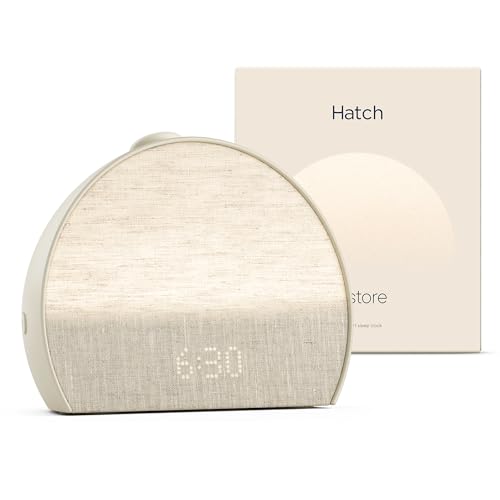
Hatch Restore 3 Sunrise Alarm Clock
- Gradual 30-minute light ramp that starts your cortisol rise before the sound does
- Sound + light wake combo — you stop depending on auditory startle alone
- Sunset wind-down mode doubles as an evening light-restriction cue
The Hatch is the pick if you want the full package — dawn ramp, good speaker, sunset wind-down that doubles as your evening light cue. The honest caveat: it wants its app and its subscription upsell. The core alarm works without paying, and once configured you rarely touch the app again. If the phrase "once configured" made your eye twitch, keep reading.
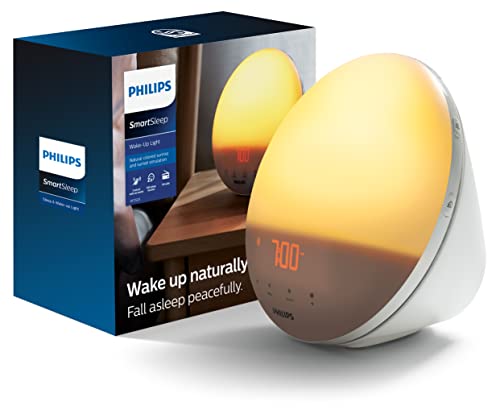
Philips SmartSleep Wake-up Light
Tested by JayThe no-app pick. ADHD readers who abandon anything that needs a phone: this one.
- No app, no account, no subscription — set it with physical buttons
- Clinically validated dawn-simulation curve (Philips published the trials)
- Sunrise plus a sunset wind-down, and radio/nature-sound backup
This is the one I point ADHD readers to most. Philips has published actual clinical validation work on its dawn-simulation curve, and the entire device is buttons-on-hardware — no account, no app, no firmware personality. It survives being knocked off the nightstand and being ignored for a month. Boring, effective, exactly the energy this protocol needs.
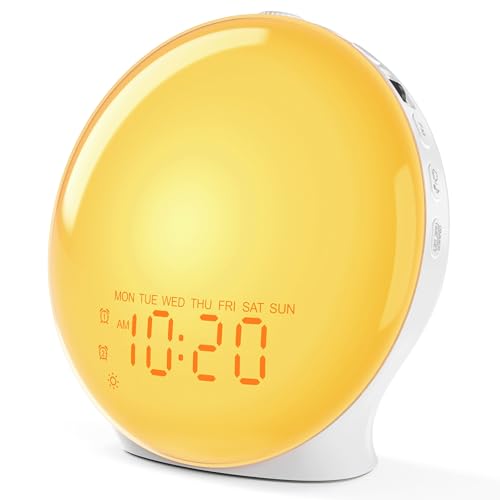
JALL Full-Screen Wake Up Light Sunrise Alarm Clocks
Proof-of-mechanism pick. Spend the minimum to find out if dawn light works for you.
- Same 30-minute sunrise ramp mechanism at roughly a quarter of the price
- Full-screen display, seven sounds, and a sunset mode
- Build quality is what you'd expect — buy it to test the mechanism, upgrade later
The budget pick exists for one job: proving the mechanism on your own body before you spend real money. Same 30-minute ramp concept, a fraction of the price, build quality to match. If two weeks of light-based waking shifts your mornings, upgrade. If it doesn't, you've spent very little finding out — though check the apnea caveat in the pillar article before concluding light "doesn't work" on you.
The $0-ish version
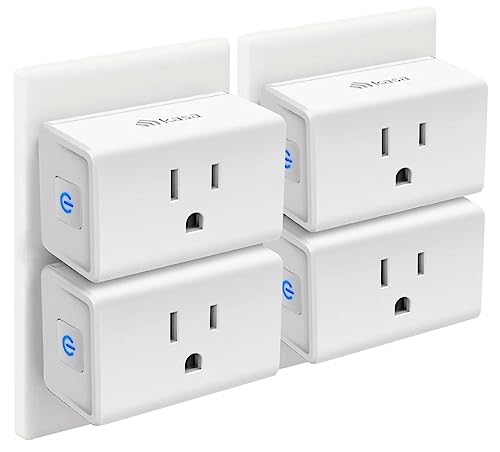
Kasa Smart Plug Mini 15A
Tested by JayThe honest budget answer: you may not need a sunrise clock at all.
- Schedule your existing brightest lamp to slam on at wake time
- No new device to learn, nothing to charge, nothing to configure nightly
- Harsher than a dawn ramp — but the light still hits your clock
Head to head
| Pick | Hatch Restore 3 Sunrise Alarm Clock | Philips SmartSleep Wake-up Light | JALL Full-Screen Wake Up Light Sunrise Alarm Clocks | Kasa Smart Plug Mini 15A |
|---|---|---|---|---|
| Tested | ✓ Used by Jay | ✓ Used by Jay | Spec-reviewed | ✓ Used by Jay |
| Why this one | The one to get if you want zero-friction dawn simulation and don't mind an app. | The no-app pick. ADHD readers who abandon anything that needs a phone: this one. | Proof-of-mechanism pick. Spend the minimum to find out if dawn light works for you. | The honest budget answer: you may not need a sunrise clock at all. |
| Check price → | Check price → | Check price → | Check price → |
How to choose in 20 seconds
- Want it to just work forever, no phone: Philips HF3520.
- Want the nicest experience and don't mind an app: Hatch Restore.
- Skeptical, testing the mechanism: JALL, or the smart-plug trick.
- Chronic device-abandoner (be honest): the fewer features, the better. Philips or the plug.
Whichever you pick, the device is maybe 30% of the result. The other 70% is the boring part no one can sell you: same wake time every day, and light in your eyes — ideally outside — within the first hour. The full sequence lives in Fix Your Sleep First, and if tonight is the immediate problem, start with the racing-thoughts protocol.
Questions people actually ask
Do sunrise alarm clocks work for ADHD?
They target the right mechanism. ADHD sleep problems are largely circadian — a delayed clock — and gradual morning light is a genuine phase-advance signal, unlike sound, which just startles you awake mid-cycle. They work best combined with a fixed wake time and evening light restriction.
What should I look for in a sunrise alarm for ADHD?
Three things: a light ramp of 20–30 minutes that reaches genuinely bright output, physical controls that work without a phone, and a failure mode you can live with. For many ADHD users, 'no mandatory app' is the difference between using it daily and abandoning it in a week.
Is there a cheap alternative to a sunrise alarm clock?
Yes: a smart plug on your brightest lamp, scheduled to switch on at wake time. You lose the gentle ramp but keep the mechanism — morning light hitting your eyes at a consistent time. Around $12, and a legitimate way to test whether light-based waking works for you.
Are sunrise alarms a substitute for morning sunlight?
No. Outdoor light is several times brighter than any bedside device and remains the strongest clock-shifting signal. A dawn simulator starts the wake-up; ten minutes outside afterwards finishes the job. Use both when you can.
Sources
- Delayed circadian rhythm in adults with attention-deficit/hyperactivity disorder and chronic sleep-onset insomnia — Biological Psychiatry (2010)
- An open trial of light therapy in adult attention-deficit/hyperactivity disorder — Journal of Clinical Psychiatry (2006)
The list
One protocol at a time, to your inbox.
No 30-day email courses. No PDFs you'll never open. When a protocol survives testing, you get the write-up. Unsubscribe anytime.